Constructive dismissal in South Africa: what it is and how to prove it
4 min read · General information, not legal advice
Quick answer
Constructive dismissal happens when an employee resigns because the employer made continued employment intolerable (section 186(1)(e) of the Labour Relations Act). The law treats it as a dismissal, so the employee can claim it was unfair.
What the employee must prove
That they resigned, that staying on had become truly intolerable, and that the employer caused it. Ordinary unhappiness, a difficult manager or a single argument is usually not enough.
Use internal options first
Raise a written grievance before resigning where you reasonably can. The CCMA often asks whether you tried to fix the problem first.
Deadline
Refer the dispute to the CCMA or your bargaining council within 30 days of resigning. Keep emails, messages and grievance letters as evidence.
For employers
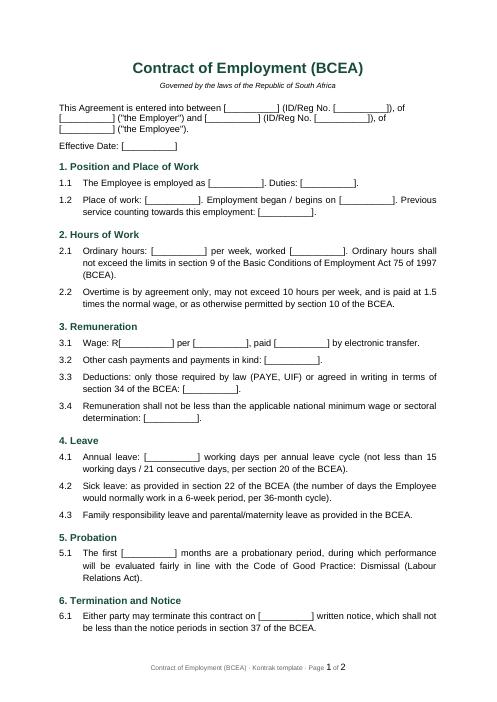
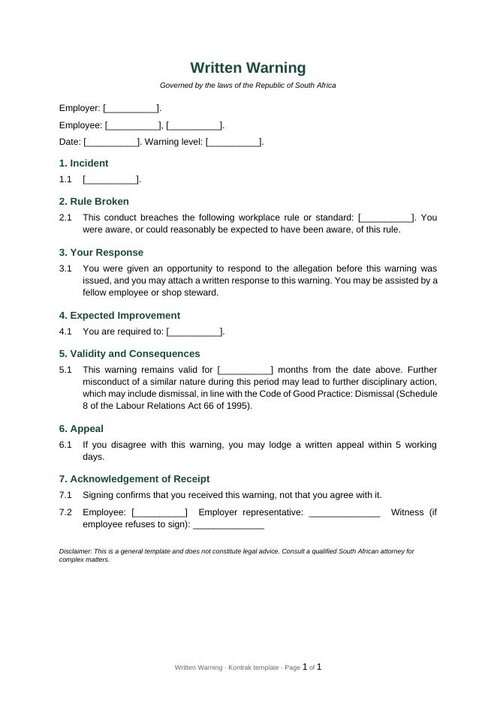
Clear written contracts, a grievance procedure and fair discipline lower the risk. Our employment contract and written warning templates help you keep a paper trail.
Free to fill in
Employment Contract (BCEA)
Fill it in online free, preview it as you go, then download Word + PDF from R199.
Frequently asked questions
Is constructive dismissal hard to prove?
Yes. The employee carries the burden of proving the employer made continued employment intolerable.
Should I resign before going to the CCMA?
Constructive dismissal only exists once you resign, but get advice first because resigning is hard to undo.
How long do I have to claim?
30 days from the date you resigned.