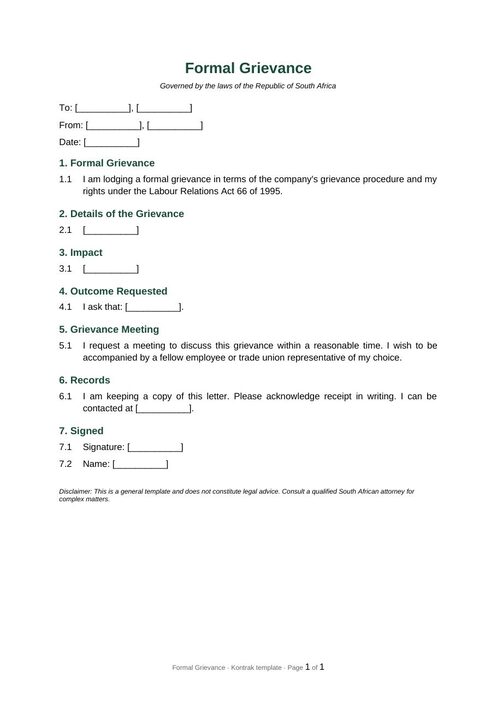
 Preview · page 1
Employees raising a complaint about treatment, pay, harassment or working conditions
Grievance Letter (Employee)
Raise a formal workplace grievance in writing: what happened, who was involved and what you want done.
Quick answer
A grievance letter (employee) is a written agreement used by employees raising a complaint about treatment, pay, harassment or working conditions in South Africa. This template covers clear statement that this is a formal grievance, facts with dates and people involved, impact on you, outcome you're asking for and more, drafted with POPIA, the CPA and the ECT Act in mind.
R199
Free live preview · filled Word + PDF · reuse forever
Sign and send: fill it in, pay once, then sign online and email it to the other side to sign back. Included free.
Or get any 3 for R399 · all 43 for R599
What's inside
- 01Clear statement that this is a formal grievance
- 02Facts with dates and people involved
- 03Impact on you
- 04Outcome you're asking for
- 05Request for a meeting and right to representation
- 06Note that you're keeping a copy
Good to know
Can I be dismissed for lodging a grievance?+
No. Victimising an employee for raising a grievance in good faith can be an automatically unfair dismissal or unfair labour practice.
What if my grievance is ignored?+
Follow up in writing. If the matter is a dispute the CCMA deals with, such as an unfair labour practice, you can refer it there within the time limits (90 days for unfair labour practices).
How do I write a grievance letter?+
State that it's a formal grievance, set out the facts with dates and names, explain the impact, say what outcome you want and ask for a meeting. Keep it factual and keep a copy.
How long does an employer have to respond to a grievance?+
Follow your company's grievance procedure, which usually sets timeframes. Without one, the employer must deal with it within a reasonable time.
Can I bring someone to a grievance meeting?+
Most grievance procedures let you bring a fellow employee or a union representative.
Is this legal advice?+
No. It's a professionally structured starting point. For high-value or unusual deals, have an attorney review your completed document.