Eviction process South Africa: the PIE Act steps for landlords and tenants
6 min read · General information, not legal advice
Quick answer
In South Africa only a court order can evict someone from their home. The Prevention of Illegal Eviction from and Unlawful Occupation of Land Act 19 of 1998 (PIE Act) sets out the steps. Locking a tenant out or cutting off water or electricity is illegal.
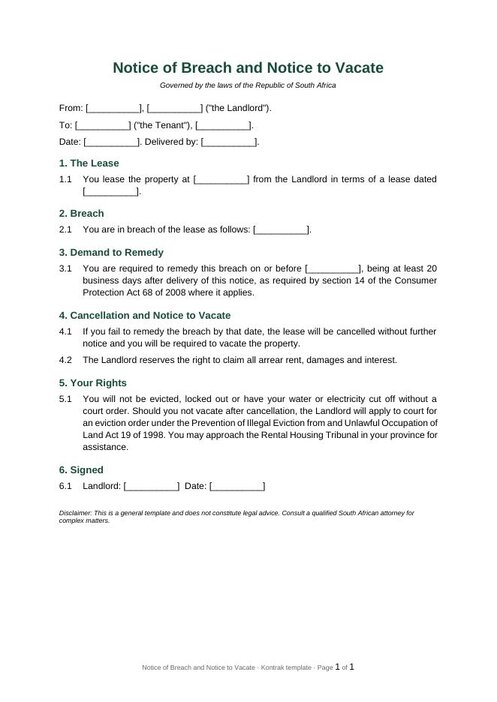
Step 1: notice of breach
Give the tenant written notice of the breach, such as unpaid rent, and time to fix it. Under the Consumer Protection Act, a fixed-term lease generally requires 20 business days' notice before cancelling.
Step 2: cancel the lease
If the breach isn't fixed, cancel the lease in writing. The tenant then occupies unlawfully.
Step 3: court application
Apply to the Magistrate's Court or High Court for an eviction order. The court must authorise a separate notice (the section 4(2) notice), served on the occupier and the municipality at least 14 days before the hearing.
Step 4: the hearing
The court decides whether eviction is just and equitable, considering things like whether elderly people, children, disabled people or women-headed households live there, and whether other accommodation is available.
Step 5: the sheriff
If granted, the order gives a date to leave. Only the sheriff may carry out the eviction if the occupier doesn't leave.
Get help
The Rental Housing Tribunal in your province can help with rent disputes for free, but it can't grant evictions. Eviction cases usually need an attorney.
Free to fill in
Notice of Breach & Notice to Vacate (Tenant)
Fill it in online free, preview it as you go, then download Word + PDF from R199.
Frequently asked questions
How long does an eviction take in South Africa?
It depends on the court and whether it's opposed. Unopposed cases often take a few months, while opposed cases take longer.
Can a landlord change the locks?
No. That is an illegal eviction under the PIE Act and can be a criminal offence.
Can I evict a tenant for not paying rent?
Yes, through the court process: notice of breach, cancellation, then a PIE application.