Retrenchment in South Africa: section 189 steps and severance pay
5 min read · General information, not legal advice
Quick answer
Retrenchment is dismissal for operational requirements: economic, technological or structural reasons. Under section 189 of the Labour Relations Act the employer must consult the affected employees in good faith before deciding, and pay severance of at least one week's pay for every completed year of service (section 41 of the BCEA).
Step 1: the written notice
The employer must issue a written notice inviting consultation (section 189(3)). It should disclose the reasons, alternatives considered, how many employees may be affected, the proposed selection criteria, the timing, the severance proposed and any help offered.
Step 2: consultation
Both sides must try to reach consensus on ways to avoid or reduce dismissals, change their timing, soften their effect, the selection method and severance. Employees can make written proposals and the employer must respond to them.
Step 3: fair selection
Selection must use agreed criteria, or fair and objective ones such as last in, first out, skills or length of service.
Large retrenchments
Employers with more than 50 employees who plan to retrench larger numbers follow the extra procedures in section 189A, which can include a facilitator from the CCMA.
If you think it was unfair
An employee can refer the dispute to the CCMA or bargaining council within 30 days of dismissal. This guide is general information; speak to an attorney or your union about your own case.
Free to fill in
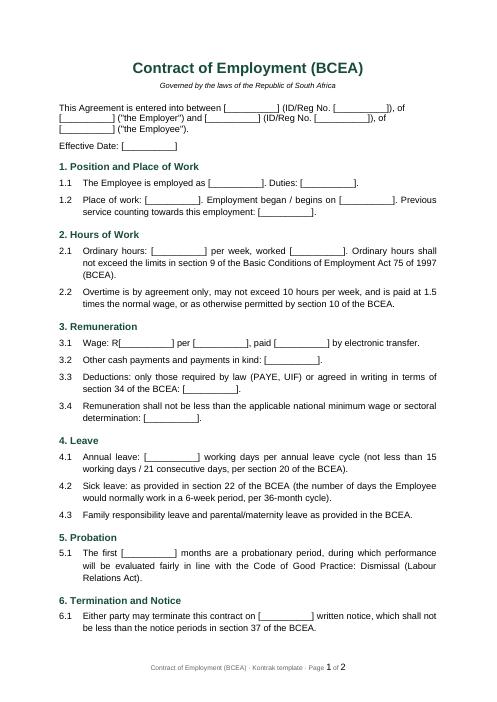
Employment Contract (BCEA)
Fill it in online free, preview it as you go, then download Word + PDF from R199.
Frequently asked questions
How much is severance pay in South Africa?
At least one week's remuneration for each completed year of continuous service, under section 41 of the BCEA.
Do I lose severance pay if I refuse another job offer?
You can, if you unreasonably refuse an offer of alternative employment with the same or another employer.
Can I claim UIF after retrenchment?
Yes. Retrenched employees who contributed to UIF can usually claim unemployment benefits.