Tenant and landlord rights in South Africa under the Rental Housing Act
7 min read · Last updated 8 October 2026 · General information, not legal advice
Quick answer
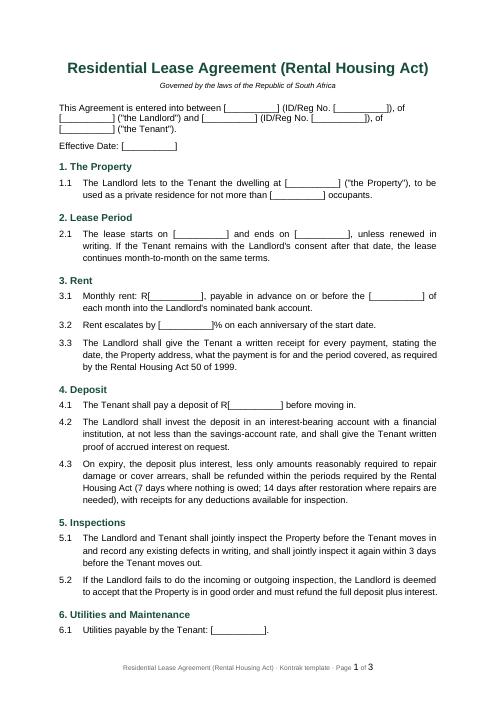
The Rental Housing Act 50 of 1999 sets the ground rules: deposits must be held in an interest-bearing account, incoming and outgoing inspections are mandatory, the property must be habitable, and a tenant can only be evicted by a court order under the PIE Act. A written lease protects both sides.
Deposits
The landlord must invest the deposit in an interest-bearing account and refund it, with interest, within 7 days of the outgoing inspection if there's no damage — or within 14 days of repairs if there is.
Inspections
A joint incoming inspection must happen before the tenant moves in, and a joint outgoing inspection when the lease ends. If the landlord skips the outgoing inspection, the deposit must be refunded in full.
Maintenance and habitability
The landlord must provide a property that is habitable and maintain the structure. Tenants must use the property reasonably and report problems. Put repair responsibilities in the lease to avoid fights.
Rent increases
There's no statutory cap for private rentals, but an increase must follow the lease — usually annual, on proper notice. An unreasonable increase can be taken to the Rental Housing Tribunal as an unfair practice.
Eviction
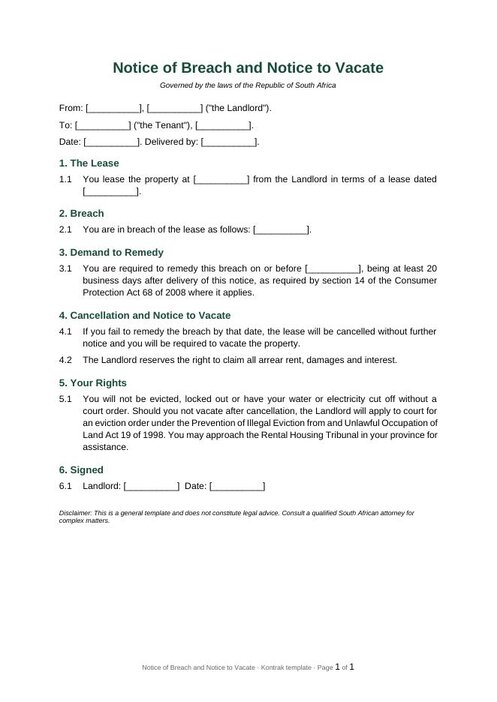
A landlord may never lock a tenant out, cut water or electricity, or remove belongings. Eviction requires written notice, cancellation of the lease, and then a court order under the PIE Act. Only the sheriff can remove a tenant.
The Rental Housing Tribunal
Every province has a free tribunal that hears complaints about unfair practices — deposit disputes, unlawful evictions, failure to maintain. It's faster and cheaper than court.
Get it in writing
Verbal leases are legal but hard to prove. A written lease setting out the deposit, notice periods, inspections and house rules is the single best protection for both landlord and tenant.
Free to fill in
Residential Lease Agreement
Fill it in online free, preview it as you go, then download Word + PDF from R199.
Official sources
Frequently asked questions
Can a landlord evict a tenant without a court order in South Africa?
No. The PIE Act requires a court order for every residential eviction, and only the sheriff may carry it out. Lockouts and utility cut-offs are unlawful.
How much notice must a tenant give to end a lease?
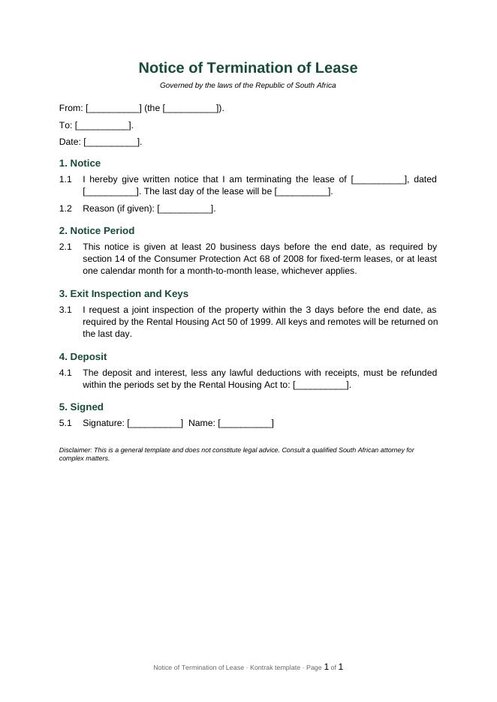
Usually one calendar month under a month-to-month arrangement. Under the CPA, a tenant may cancel a fixed-term lease on 20 business days' notice, possibly with a reasonable cancellation penalty.
Who pays for repairs in a rental property?
The landlord covers structural repairs and keeping the property habitable; the tenant covers damage they cause and day-to-day care. The lease should spell this out.